![Magyarbusz [Info] International](https://bunny-wp-pullzone-thjj7ocpga.b-cdn.net/wp-content/uploads/2025/06/cropped-cropped-mbi_sby_v1-scaled-1.png)

This article has been translated using AI-powered tools. While we strive for perfect accuracy, some nuances may differ from the original Hungarian version.
The government has submitted to Parliament a bill that could bring one of the most significant institutional restructurings of recent decades in Hungarian public transport. Under the proposal, not only will a national transport authority be established, gradually taking over the commissioning and organising tasks for state-ordered suburban, regional and national passenger transport, but a national rolling stock management company (ROSCO) will also be created to handle the ownership and financing responsibilities for railway vehicles purchased from public funds. The aim is to establish a fully state-owned institutional system in which the national transport authority does not operate as a transport service provider, but represents the interests of passengers and the state as the commissioner, coordinator and controller of public services, while the ROSCO ensures the availability of the railway rolling stock required for those public services.
Although there are few, if any, examples in Western Europe of a transport authority with nationwide powers, organisations responsible for commissioning and coordinating transport services have long been key players in European public transport. In Hungary, this role is performed by BKK in Budapest and KeKo in Kecskemét, while similar models operate, among others, in London through Transport for London (TfL), in Stockholm through Storstockholms Lokaltrafik (SL), in Berlin and Brandenburg through Verkehrsverbund Berlin-Brandenburg (VBB), in Munich through Münchner Verkehrs- und Tarifverbund (MVV), in Vienna through Verkehrsverbund Ost-Region (VOR), in Hamburg through Hamburger Verkehrsverbund (HVV), in Paris through Île-de-France Mobilités (IDFM), in Prague through ROPID, and in Brno through KORDIS JMK. These organisations typically do not carry passengers themselves, but plan the network, design the timetable and fare system, commission, finance and monitor the services. The national transport authority now being created, however, would be given an even broader remit. The government has also set the financial framework for establishing the organisation: the new, wholly state-owned privately held company limited by shares will be set up with founding capital of HUF 55 million, while the state will provide a further HUF 445.3 million for its operation in 2026, including the amount increased by the treasury account-management fee.
Under the relevant bill, the new organisation will have an extremely broad scope of responsibilities. The national transport authority may prepare and coordinate timetables for suburban, regional and national rail and bus services, provide unified passenger information, coordinate ticket and pass sales and revenue collection, and define the uniform technical and operational conditions for ticket inspection. Its tasks will also include developing connections between transport modes, coordinating transfers, coordinating tasks related to the operation of national bus stations, and the nationwide coordination of procurements of clean and zero-emission vehicles.
The organisation will not merely have a coordinating role. According to the proposal, the minister responsible for transport will transfer a number of commissioning powers currently exercised directly by the minister to the national transport authority, which in future may act on the minister’s behalf in the conclusion, amendment and implementation of public service contracts. The detailed division of responsibilities will be regulated by a separate ministerial decree, while the minister will continue to exercise professional oversight over the new organisation and will evaluate its operation annually.
One of the most important new elements is that the law will also create an opportunity for closer cooperation between the state and local governments. The national transport authority may establish joint organisations with the commissioning bodies in order to make the planning and commissioning of local and suburban public transport more unified. This could provide a new model for coordinating transport systems particularly in large metropolitan agglomerations.
The transfer of tasks will take place in several stages. Under the law, from 31 August 2026 the commissioning rights and obligations linked to the current national public service contracts will be transferred to the national transport authority. From the same date, it will also take over KTI’s tasks related to timetables, professional preparatory work for passenger transport, and the coordination of procurements of clean and zero-emission vehicles. In addition, as legal successor it will take over free of charge from MÁV Zrt., MÁV Személyszállítási Zrt., MÁV Pályaműködtetési Zrt. and MÁV SZK the assets, rights and other resources required for its operation.
According to the bill, the national transport authority will also play a key role in preparing the future competitive tendering of rail passenger services. By the end of 2026, it must begin preparing the tendering of rail public service contracts and draw up the related strategy. In later competitive tendering procedures, it may even require the mandatory use of railway vehicles provided by the state rolling stock management company, meaning that operators may be able to bid for certain public service tasks with a standardised vehicle fleet.
Another defining element of the bill is the creation of a new national rolling stock management company, which could fundamentally reshape the management of railway vehicles in Hungary. The essence of the model, known internationally as a Rolling Stock Company (ROSCO), is that railway vehicles purchased from public funds do not go directly into the ownership of railway operators, but into that of a separate, wholly state-owned company. Under the law, this company will also be designated by the minister responsible for transport and may operate exclusively in state ownership.
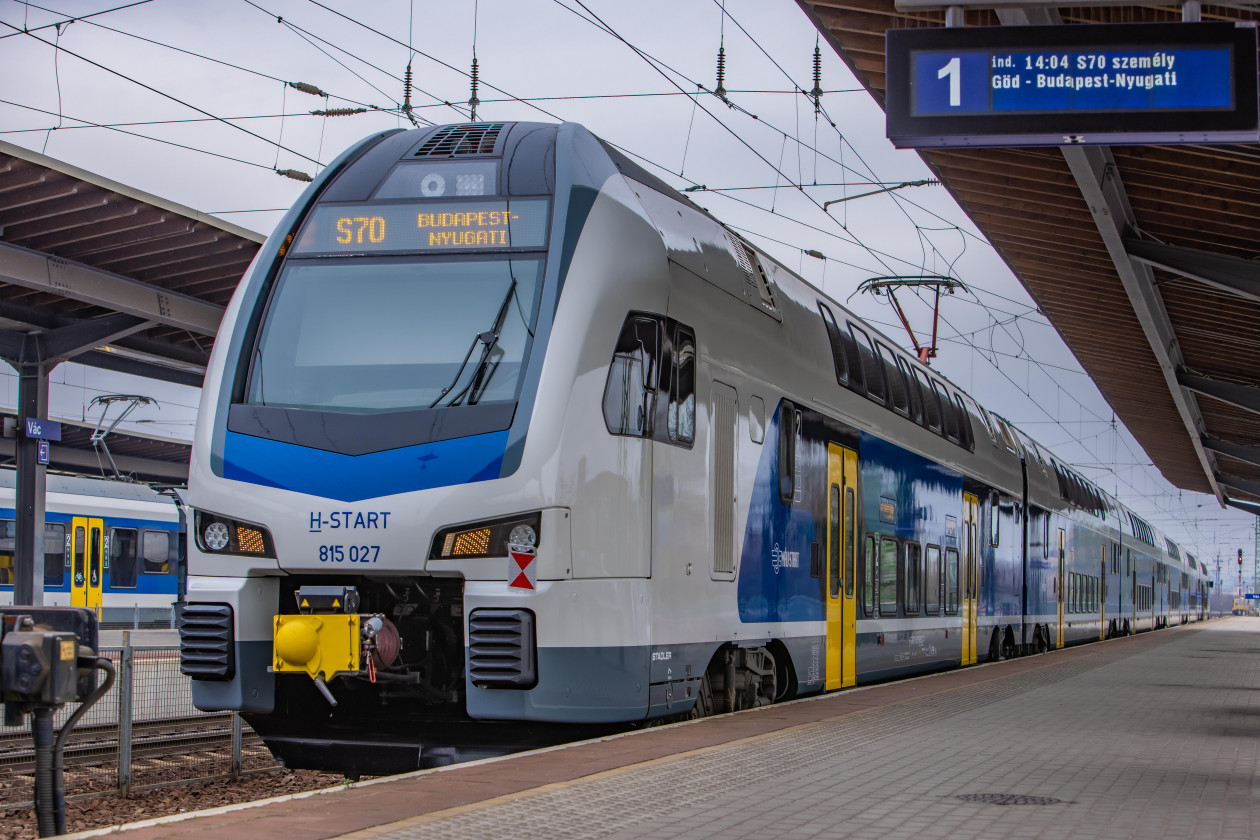
The company’s role will go far beyond simply purchasing vehicles. It will be responsible for preparing and carrying out railway vehicle procurements, defining technical requirements, organising the financing of procurements, and managing the entire life cycle of the fleet. This includes organising maintenance, overhauls and refurbishments, maintaining vehicles in operational condition, and developing and managing loan, bond or leasing structures linked to procurements. The rolling stock management company and the national transport authority will cooperate continuously to ensure that the type, quantity and technical parameters of the vehicles procured are aligned with public service needs.
The legislation also states that from the resources of the European Recovery and Resilience Facility (RRF), the company may procure only zero-emission railway vehicles, and that these vehicles will remain in the exclusive ownership of the rolling stock management company until the end of their useful life. The national transport authority will be able to make these vehicles available, through a competitive tendering procedure, to railway companies winning public service contracts, under fair, transparent and competitively neutral conditions.
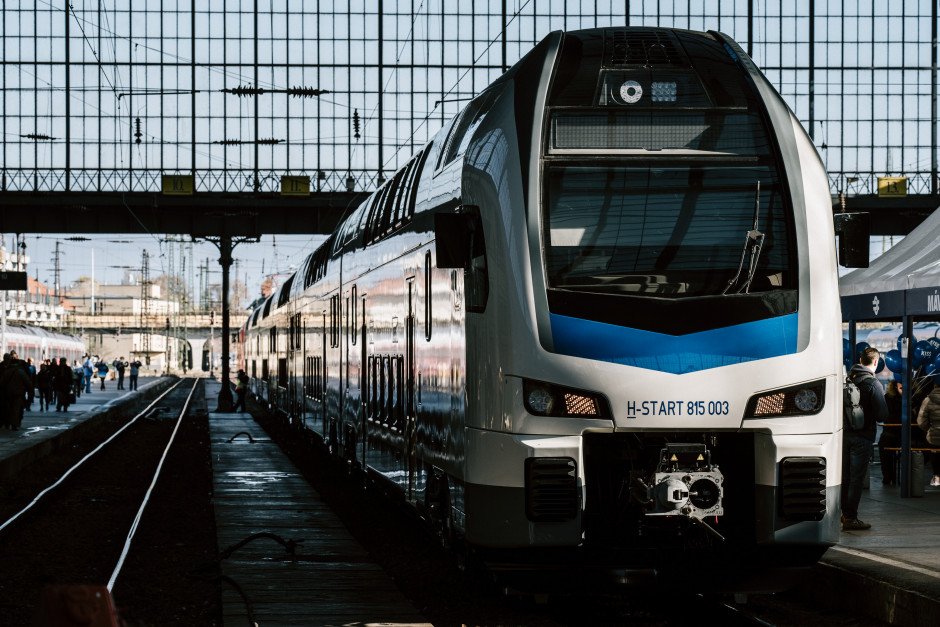
The aim of the model is to ensure that vehicles purchased from public funds do not increase the assets of a single railway company, but remain in state ownership and can in future be accessed on equal terms by any railway undertaking that wins a public service contract. This is in line with the direction of EU rail market opening, which is based on the gradual competitive tendering of public service contracts. Accordingly, the law will also allow the national transport authority to require in certain tenders the mandatory use of vehicles provided by the rolling stock management company.
The government resolution linked to the bill also sets the financial framework for the establishment of the company. Accordingly, the rolling stock management company will be created with founding capital of HUF 250 million, followed by a state capital contribution of HUF 639.6 billion, corresponding to the EUR 1.8 billion railway vehicle procurement envelope included in the Recovery and Resilience Plan. The funding is intended primarily to finance the procurement of new HÉV trainsets and intercity multiple units.
According to the general explanatory memorandum, the aim of the reform is to create a professional national commissioning organisation with appropriate resources, as well as a modern rolling stock management model. While the national transport authority could make public transport more competitive through unified timetables, a coordinated fare system, more advanced passenger information and higher-quality service commissioning, the national rolling stock management company would provide a unified ownership and financing framework for railway vehicles purchased from public funds. According to the government, the establishment of the two new organisations is also a fundamental condition for drawing down European Union railway development funds, which is why it intends to set them up and implement the gradual transfer of their responsibilities in 2026.
This article has been translated using AI-powered tools. While we strive for perfect accuracy, some nuances may differ from the original Hungarian version.
 Related Articles


