![Magyarbusz [Info] International](https://bunny-wp-pullzone-thjj7ocpga.b-cdn.net/wp-content/uploads/2025/06/cropped-cropped-mbi_sby_v1-scaled-1.png)

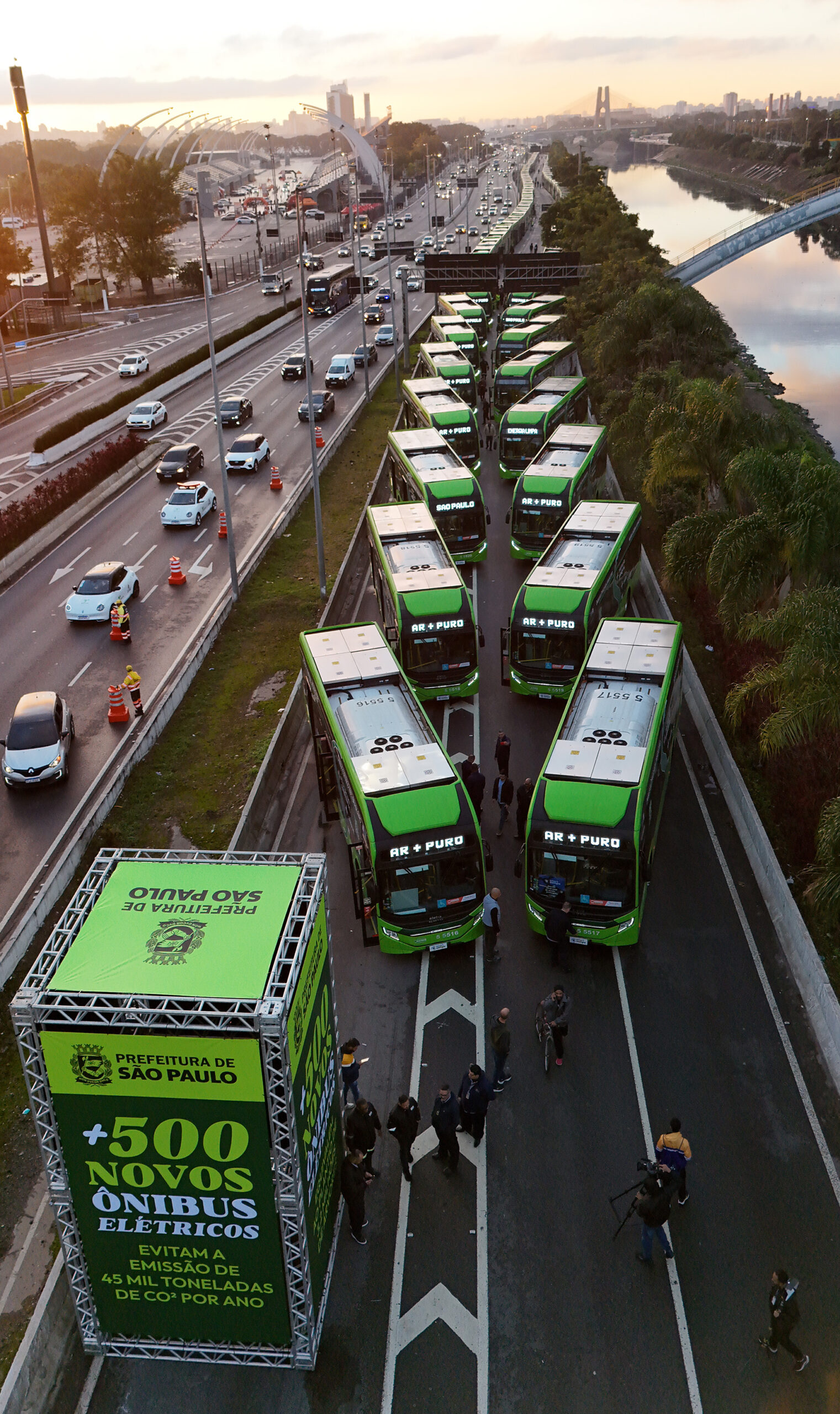
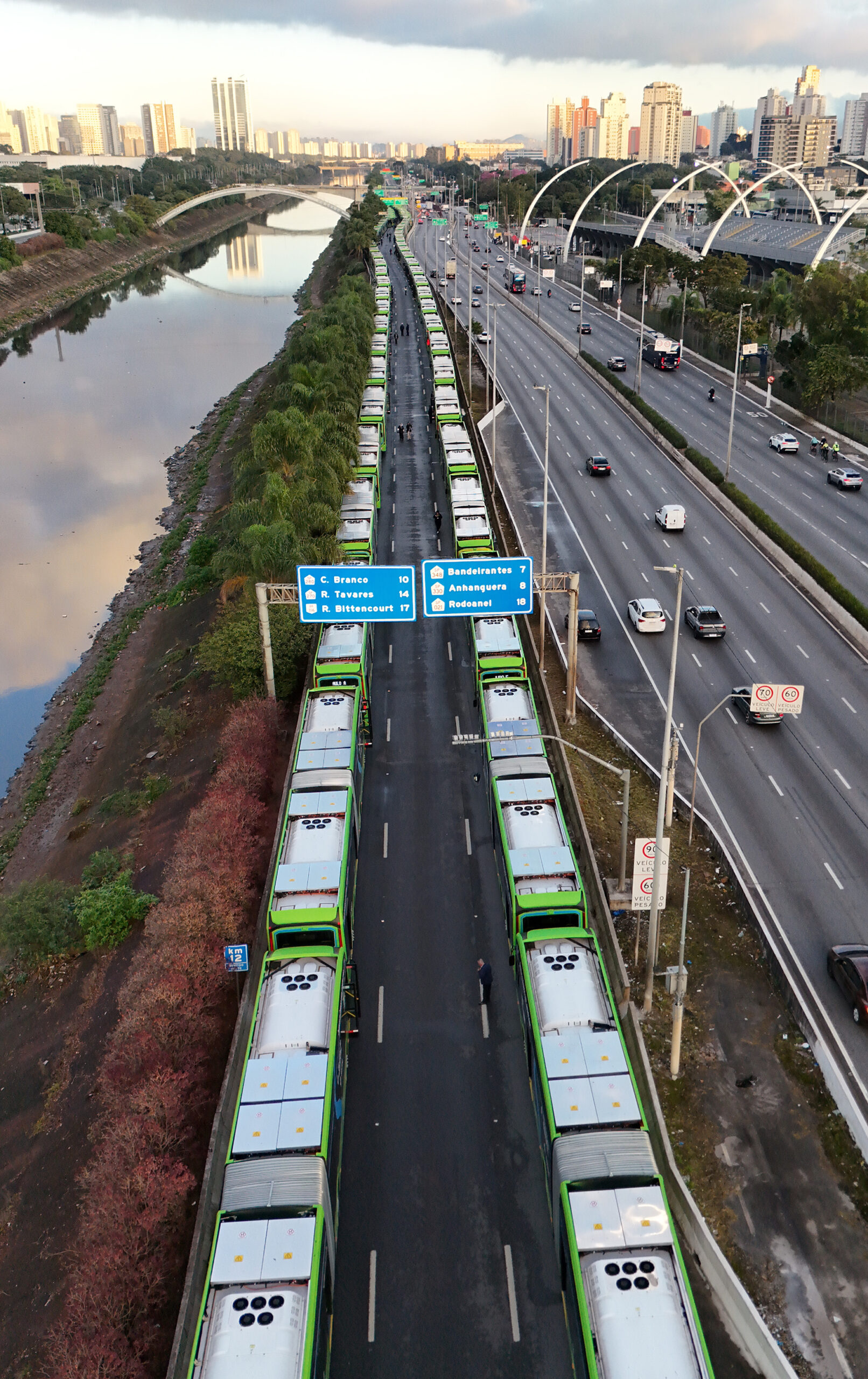
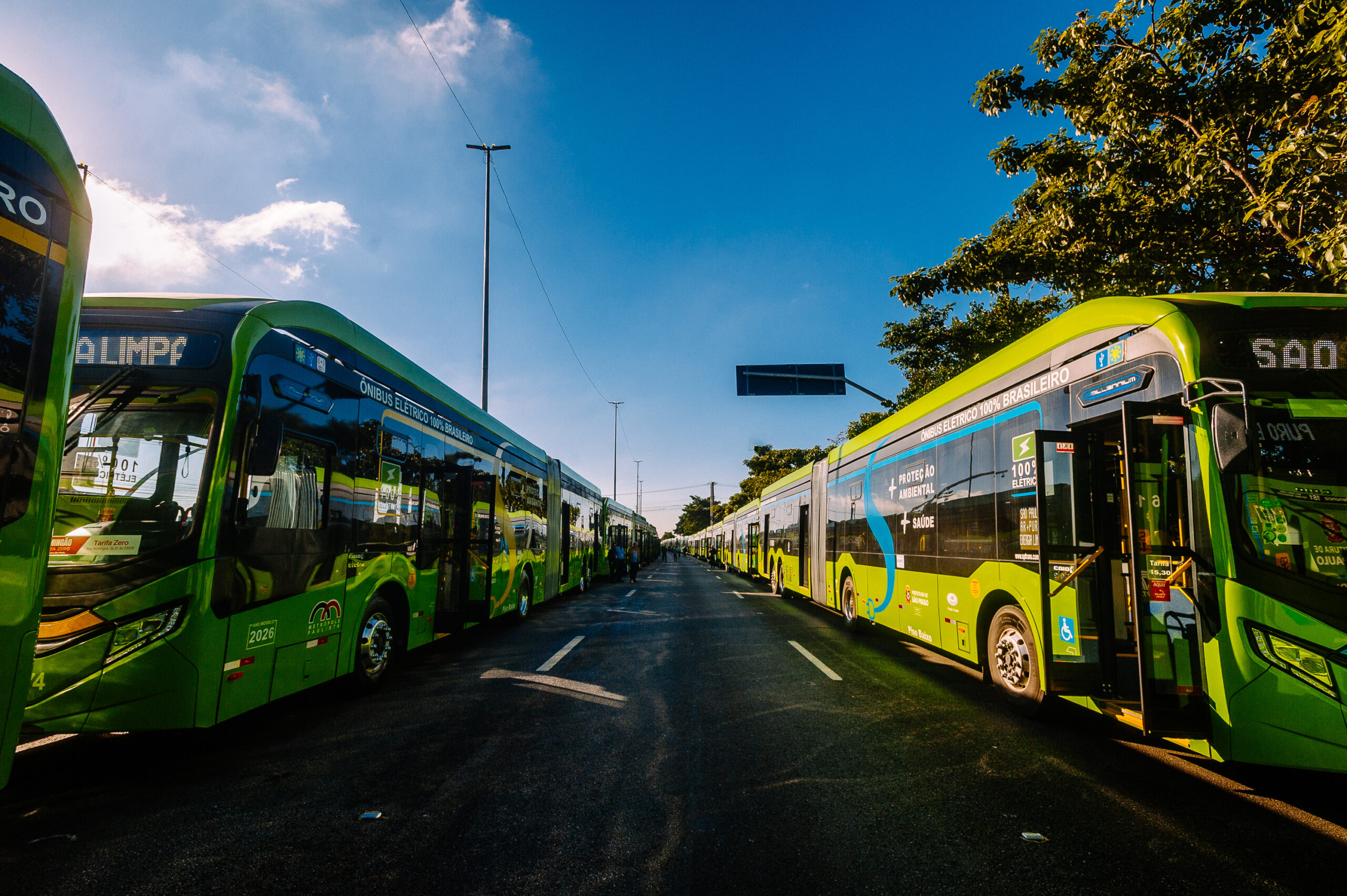
On June 21, São Paulo reached another significant milestone in the electrification of its public transport: the city administration introduced 500 new battery-electric buses into the urban transport system in a single ceremonial event. The scale of the presentation was remarkable in itself: the vehicles were lined up in two parallel rows along a more than 7-kilometer-long section of the Marginal Tietê expressway, which was completely closed for the occasion. According to the organizers, arranged in a single column, the buses would have formed a convoy nearly 15 kilometers long.
With the introduction of the new vehicles, São Paulo’s electric bus fleet has now expanded to 1,759 vehicles, including 189 trolleybuses. This makes the Brazilian metropolis by far the largest holder of electric buses in the country. During the handover, the city administration made another important announcement: São Paulo will no longer purchase solely diesel-powered buses in the future, focusing instead on zero-emission technologies for new acquisitions.
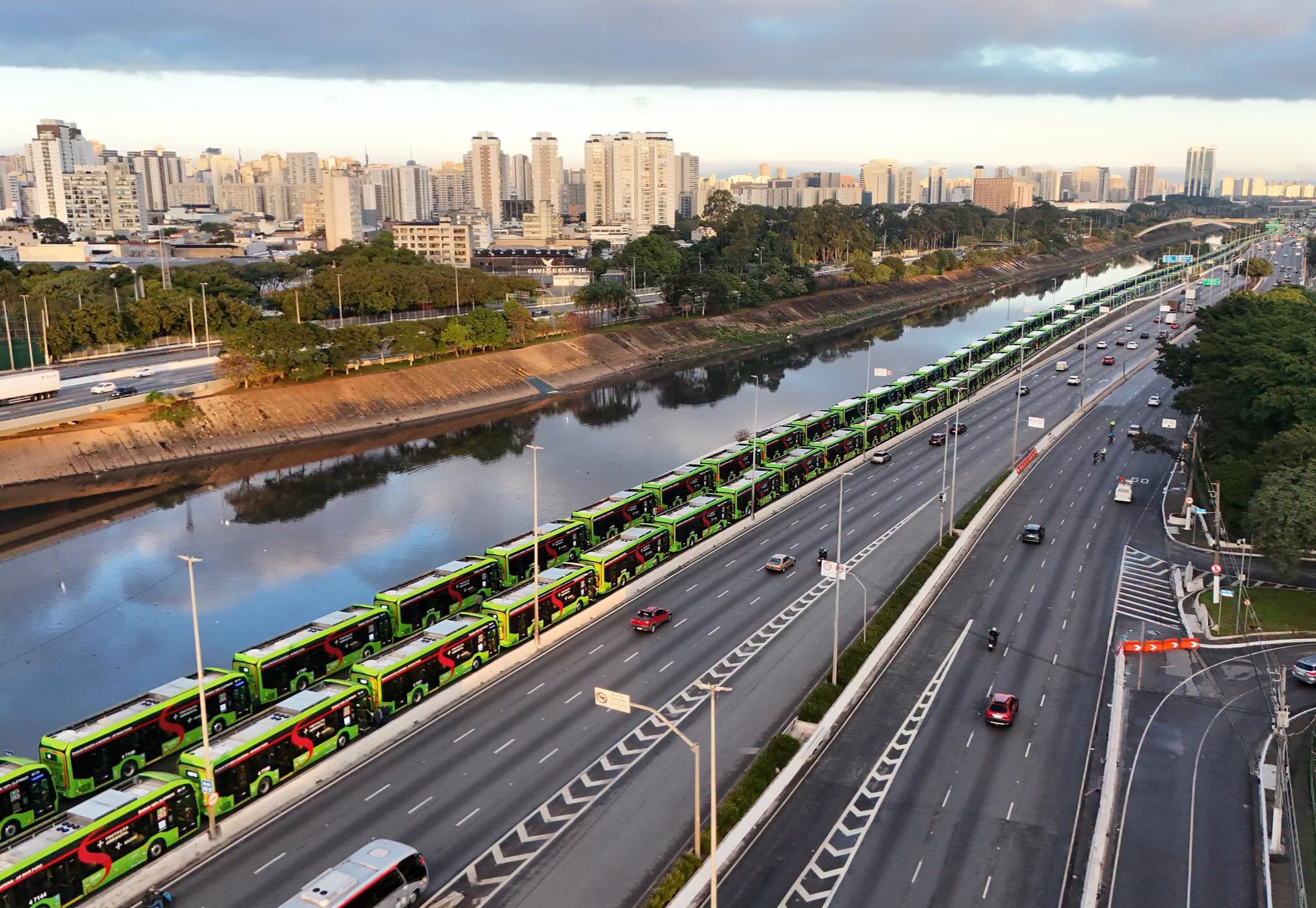
The pace of development is well illustrated by the fact that at the beginning of 2025, the city’s electric bus fleet consisted of only 460 vehicles. However, during the year, the fleet grew to 1,095—the thousandth electric bus was handed over in November 2025—and by February 2026, 1,271 vehicles were operating in the city. The 500 new buses now delivered give a significant boost to electrification. This is the first truly spectacular result of the procurement policy adopted in 2022: São Paulo’s transport organizer, SPTrans—which oversees a network of more than 13,000 buses—had already prohibited the purchase of new, solely diesel-powered buses, and during the current handover, the city administration confirmed that it will continue to build its fleet renewal program exclusively on zero-emission technologies.
The transition is noticeable not only at the city level but also regionally. By the end of 2025, the number of operating electric buses in Latin America exceeded 9,000, and by 2026, the fleet is expected to surpass the 10,000 mark. Electrification efforts are increasingly supported by political and financial backing at the national level. In November 2025, Brazil, together with Mexico, committed to allowing only the sale of new zero-emission medium and heavy-duty vehicles by 2040, aiming for at least a 30% share of these vehicles by 2030. Simultaneously, the 80 million euro Brazil E-Bus Credit Enhancement Fund was established to accelerate the spread of electric buses in Brazilian cities.
The newly deployed 500 electric buses will replace the use of approximately 20 million liters of diesel annually, while reducing carbon dioxide emissions by more than 45,000 tons. In addition, they will emit 110.6 tons less nitrogen oxides and nearly one ton (0.93 tons) less particulate matter into the air each year. The entire fleet of 1,759 electric vehicles collectively reduces diesel consumption by about 57 million liters annually, preventing nearly 130,000 tons of carbon dioxide emissions.
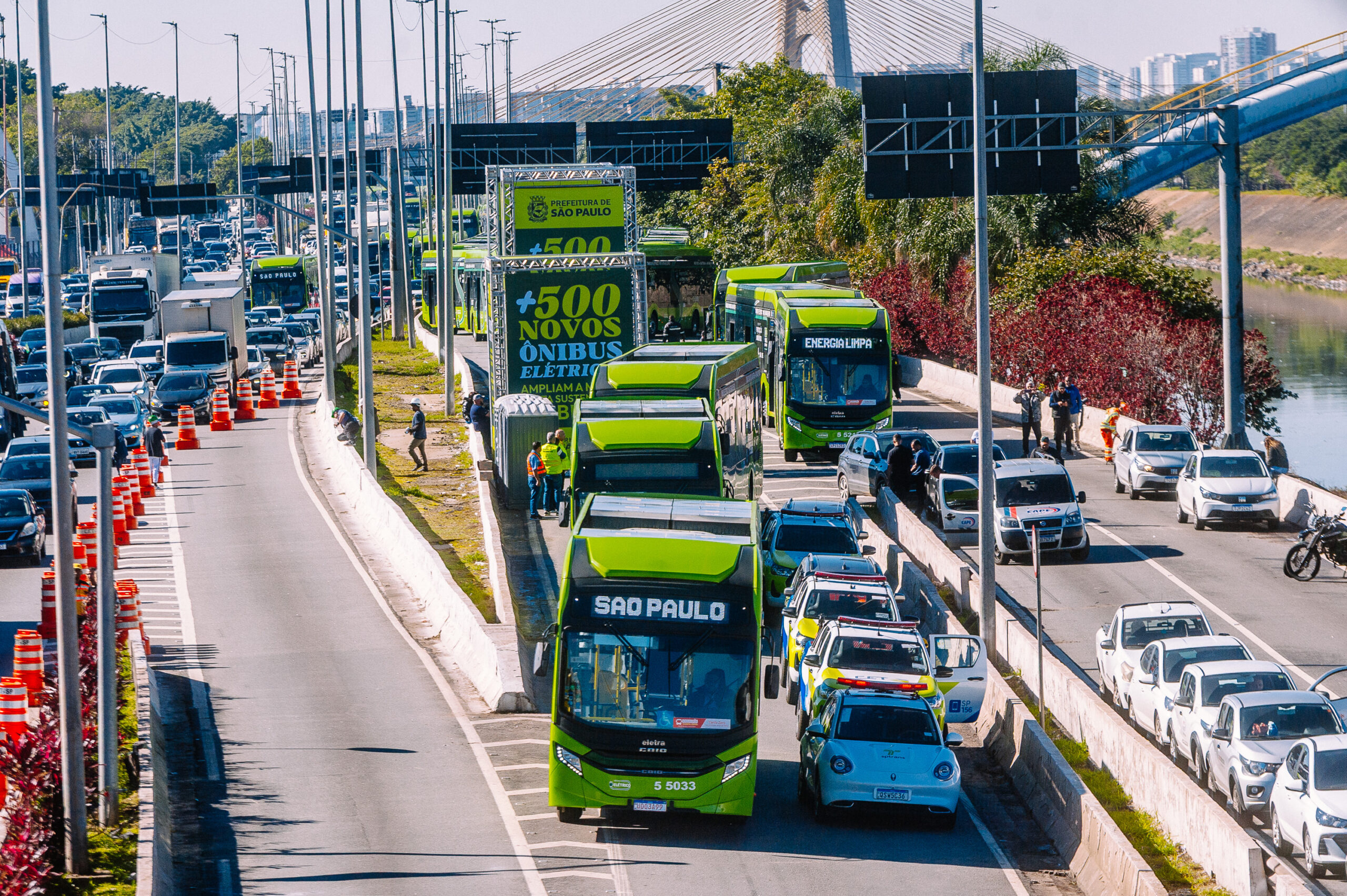
The latest delivery forms a diverse fleet: 22 midi buses, 215 standard solo buses, 159 extended 13.2-meter solo buses, 64 four-axle articulated buses measuring 21 meters, and 40 four-axle super-articulated buses measuring 23 meters were added to the urban transport system. During the handover ceremony, the buses lined up along the Marginal Tietê for about 7.2 kilometers, dramatically illustrating the exceptional scale of the procurement.
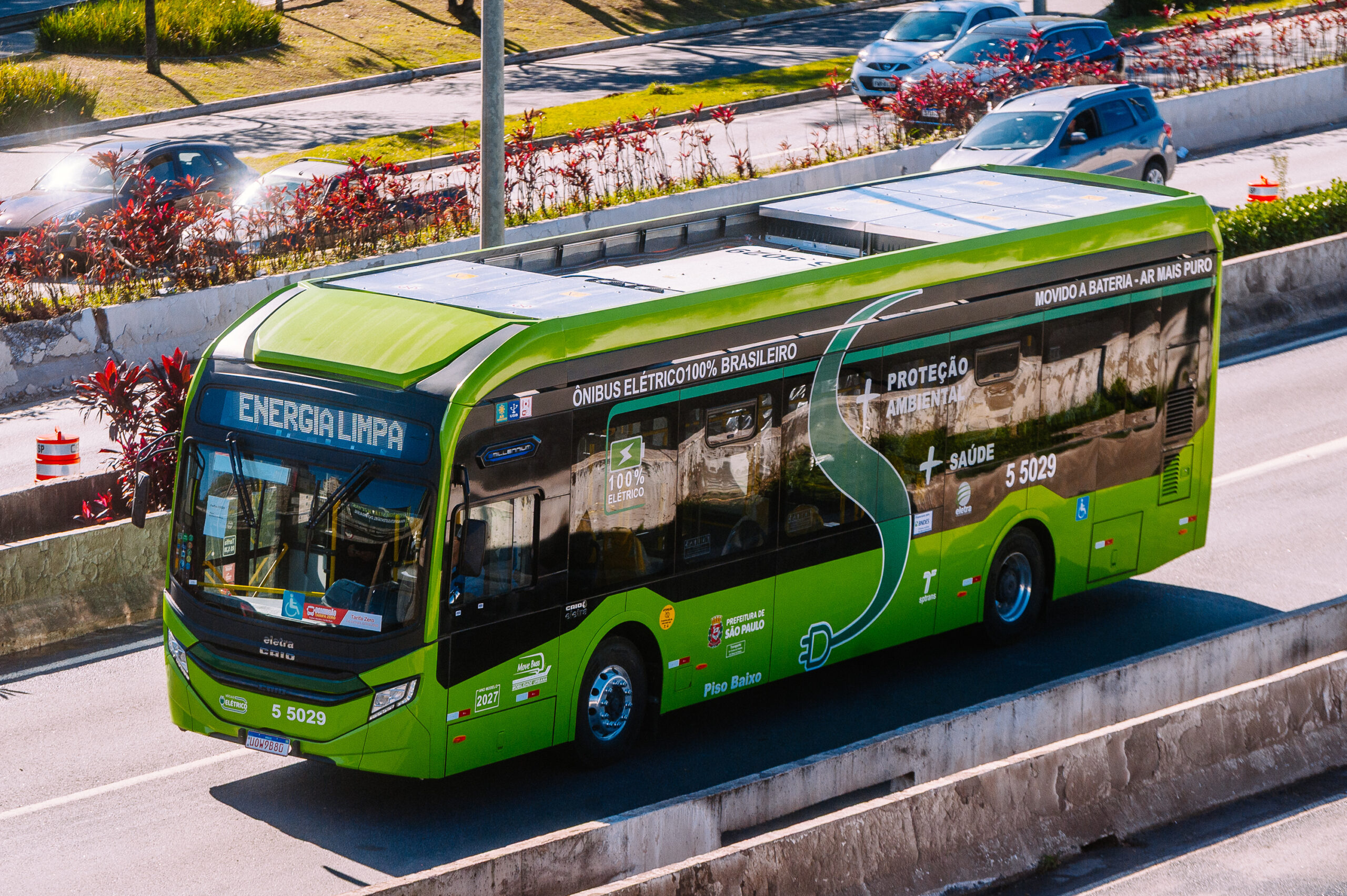
The majority of the bodies—about 450—were manufactured by the Brazilian company Caio Induscar, all belonging to the eMillennium series. BYD supplied a total of 265 electric chassis for the newly delivered fleet, which were produced in D9W solo and BC22 super-articulated versions according to the manufacturer’s designation. The 23-meter-long BC22 uses BYD’s proprietary Blade battery technology. The main components of the drivetrain are manufactured at the company’s facility in Manaus, Amazonas, northern Brazil, while final assembly took place in Campinas, São Paulo state.
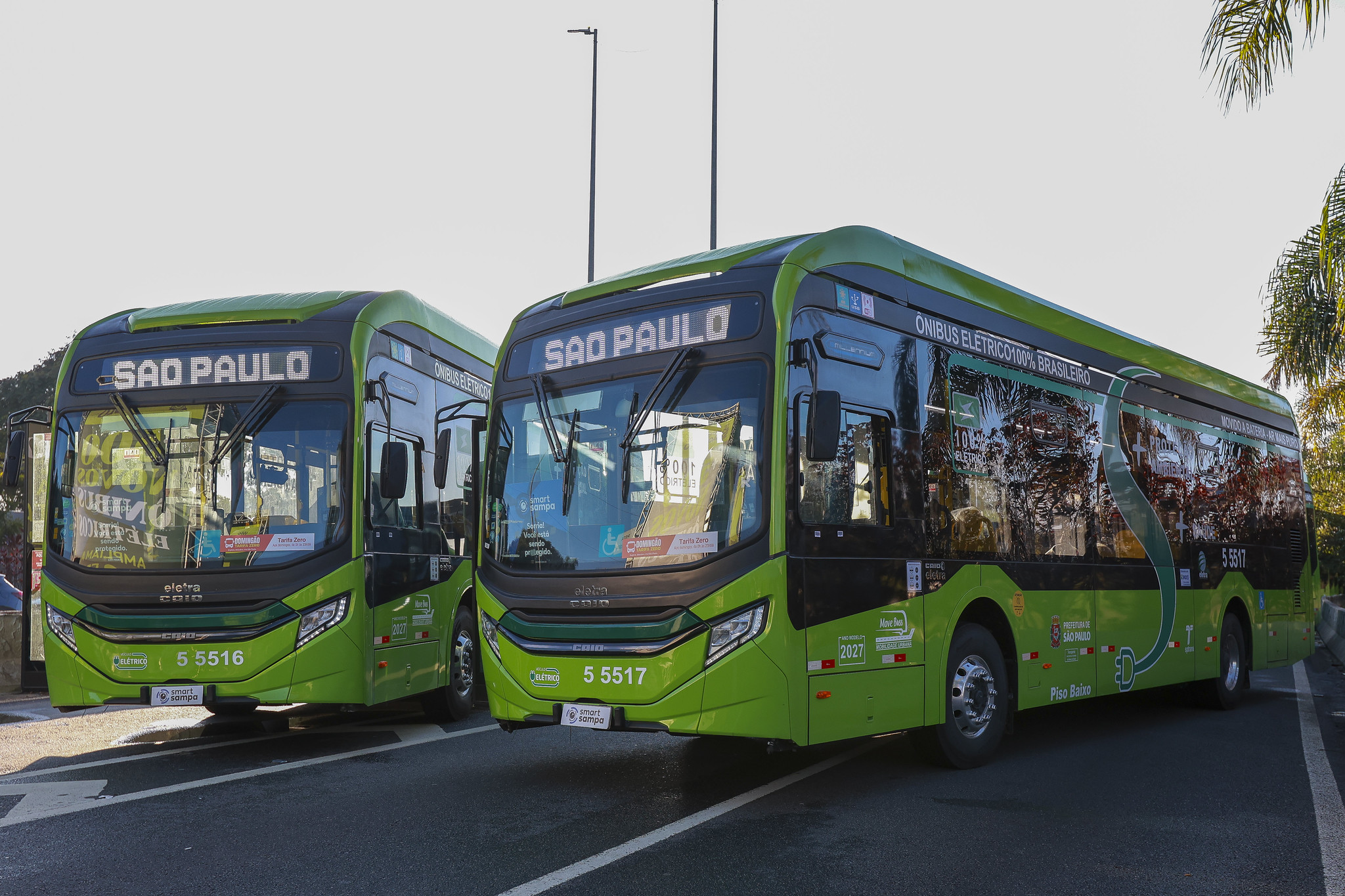
The second-largest supplier was the Brazilian company Eletra, which delivered 142 buses, also with Caio eMillennium bodies. The company does not manufacture its own chassis but integrates its electric drive system onto Mercedes-Benz and Scania chassis. Among the newly delivered vehicles, Eletra supplied the 64 four-axle articulated buses measuring 21 meters. According to the company, there are currently 792 vehicles electrified by Eletra operating in São Paulo, including 603 battery-electric buses and 189 trolleybuses, meaning nearly half of the city’s electric fleet operates with Eletra technology.
The large-scale vehicle procurement is part of a fleet renewal program initiated by São Paulo’s municipality, valued at approximately 6.5 billion Brazilian reals. A significant portion of the financing for the newly deployed vehicles is provided by the Brazilian National Bank for Economic and Social Development (BNDES). The financing model employed by the city aims to make the acquisition of an electric bus roughly equivalent in cost to that of a modern diesel bus: São Paulo’s municipality assumes the additional costs associated with electric propulsion—partly relying on BNDES financing schemes.
 Related Articles


