![Magyarbusz [Info] International](https://bunny-wp-pullzone-thjj7ocpga.b-cdn.net/wp-content/uploads/2025/06/cropped-cropped-mbi_sby_v1-scaled-1.png)

Solaris Bus & Coach has reached another significant milestone in its environmental transparency efforts: the manufacturer’s longest hydrogen-powered city model, the Urbino 18 hydrogen, has received the Environmental Product Declaration (EPD) certification according to ISO 14025. This independently verified environmental declaration is the first lifecycle assessment (LCA)-based certification in the model’s history, quantifying and making the vehicle’s environmental impacts comparable throughout its entire lifecycle. The certification is crucial, given that, according to the methodology used in the document, the sustainability of hydrogen-powered vehicles depends not only on zero-emission operation but fundamentally on how the hydrogen used is produced. The environmental performance of the Urbino 18 hydrogen can significantly improve, as assessed in the EPD, primarily if renewable energy sources replace the currently most commonly used fossil-based fuel with so-called green hydrogen in the future.
For the Urbino 18 hydrogen, the assessment is based on a standardized functional unit, which considers transporting one passenger over one kilometer, with a capacity of 129 passengers, an annual mileage of 80,000 kilometers, and a lifespan of ten years. The analysis covers the entire lifecycle, divided into three main phases: upstream, including raw materials and component production; core, limited to vehicle manufacturing; and downstream, which covers operation, maintenance, and end-of-life treatment.
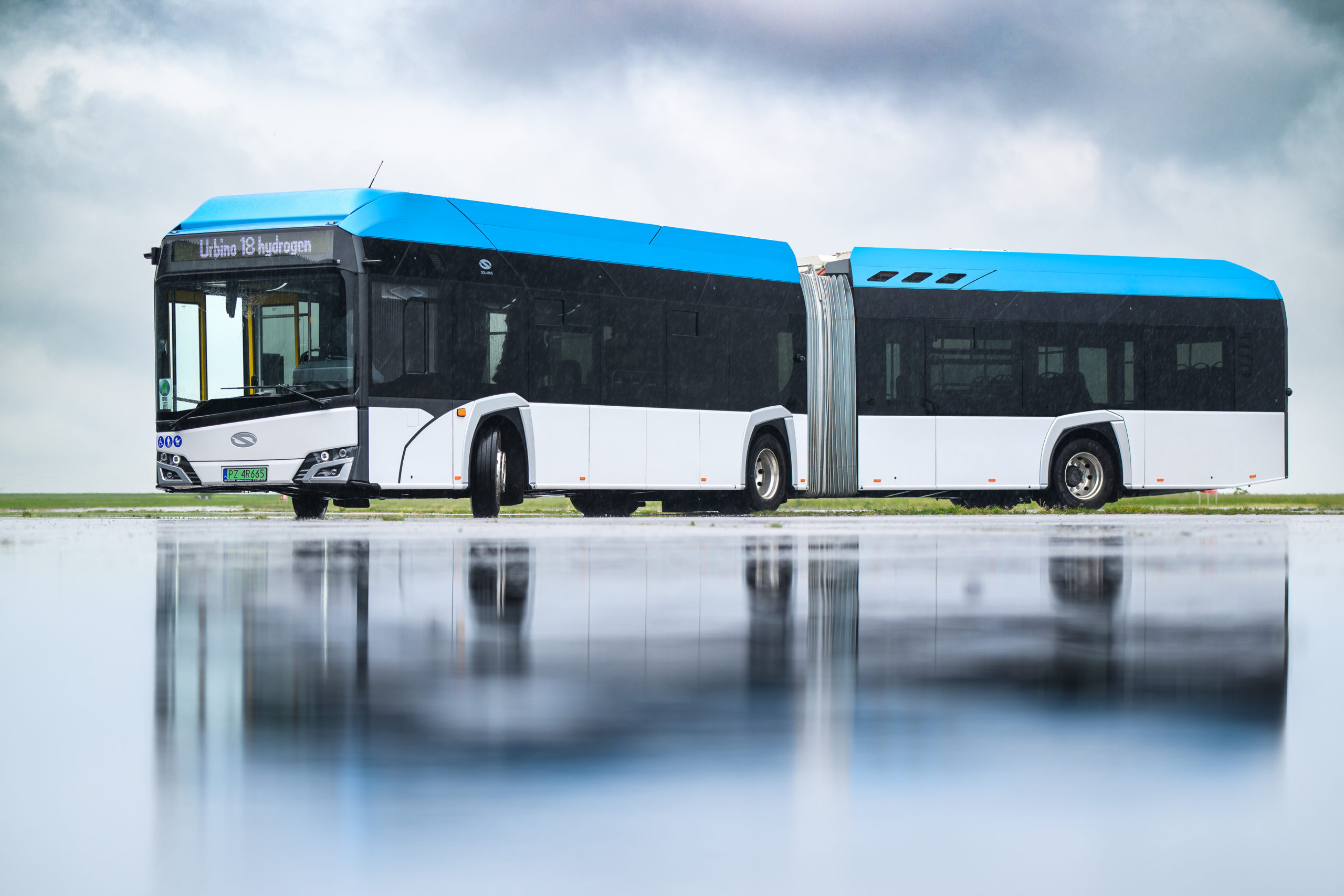
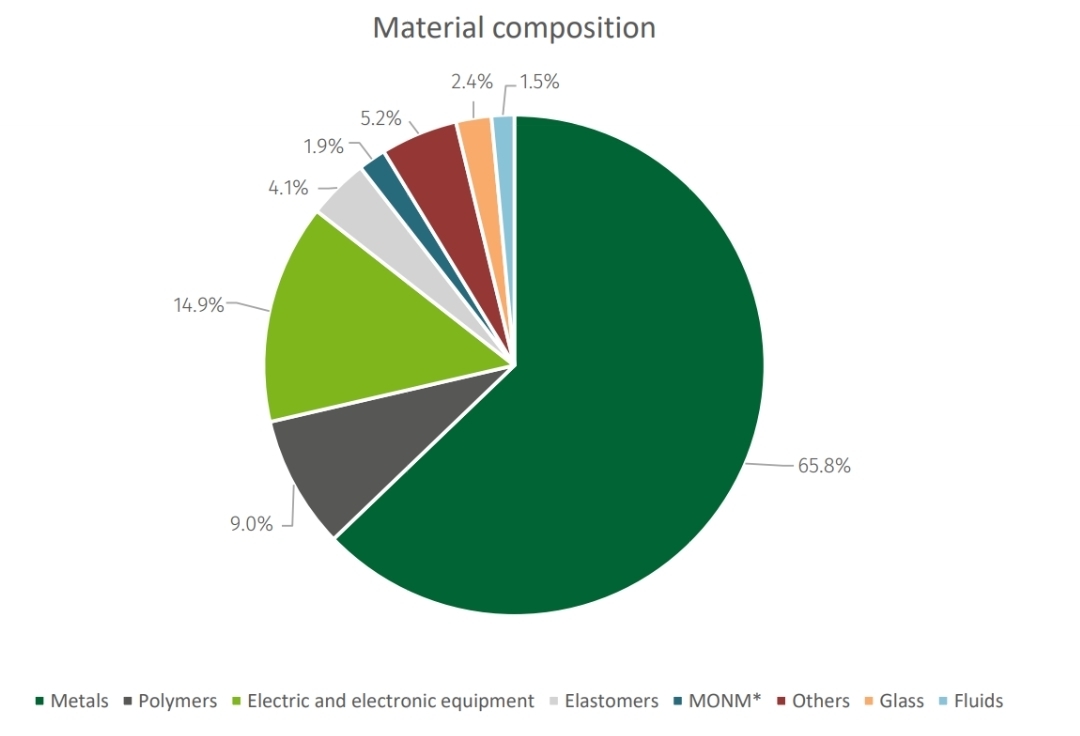
The 18-meter-long, three-axle, articulated Solaris Urbino 18 hydrogen heavily relies on recycled raw materials for its construction. Of the vehicle’s theoretical weight of nearly 20 tons, more than two-thirds, precisely 12,506 kilograms, consist of metals, primarily steel and aluminum, used for the frame structure. An overwhelming 93.7% of these metals are from certified recycled sources (17.6% pre-consumer and 76.1% post-consumer recycled material). The second-largest component, at 2,824 kilograms, consists of electrical and electronic equipment, including drive system control units, batteries, onboard systems, and cabling. An additional 1,706 kilograms are various polymer-based coverings and interior elements, while elastomers, such as rubber parts, weigh approximately 781 kilograms. The total weight of installed glass is 455 kilograms, and various fluids (including coolant, brake fluid, and lubricants) account for 291 kilograms. The remaining weight consists of other minor or composite components (such as modified natural materials). The manufacturer has prepared a comprehensive material composition inventory for the model, considering 100% of its components.
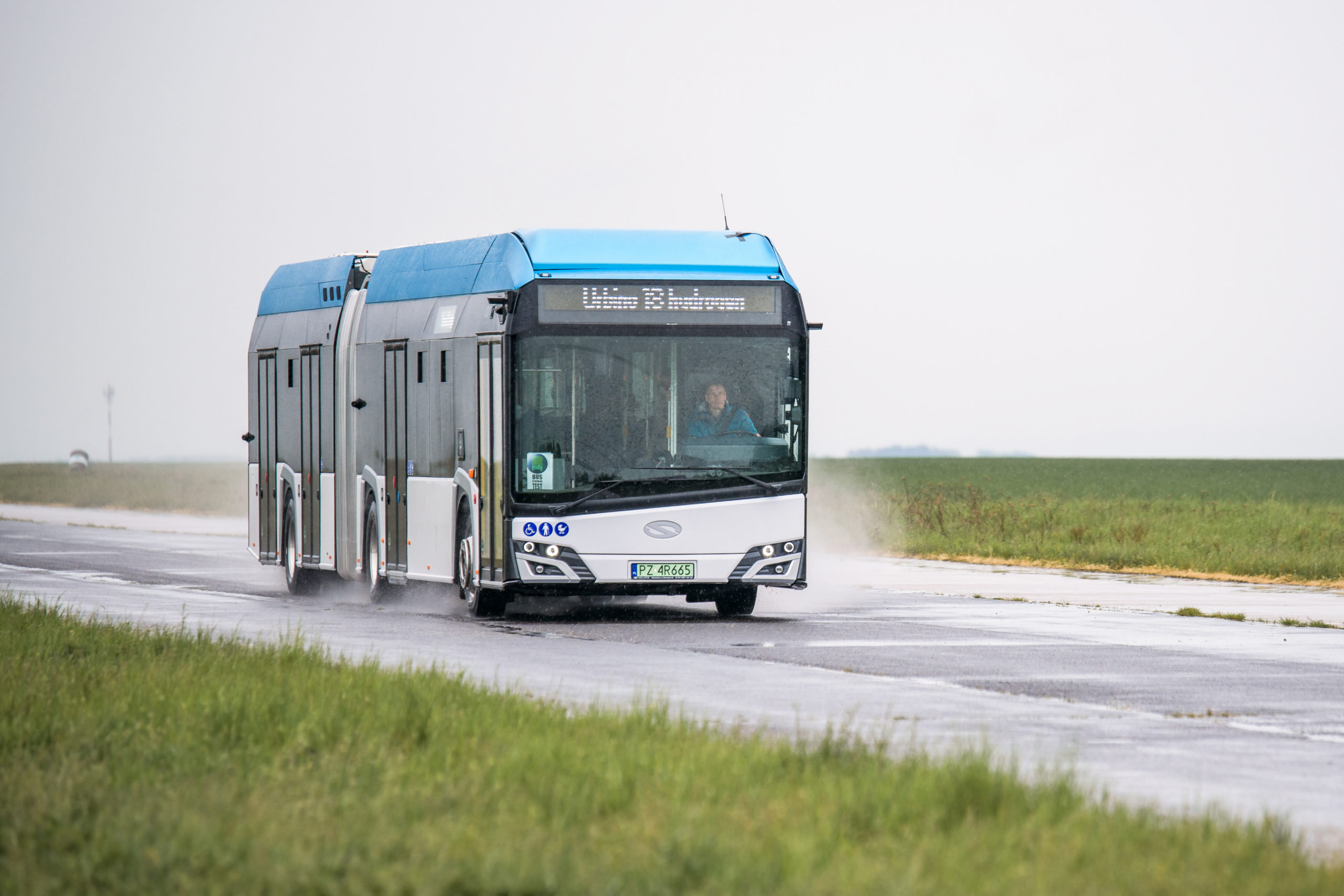
In examining energy management and fuel consumption, Solaris used a proprietary calculation model calibrated with real operational data from its eSConnect fleet management system. According to this, the Urbino 18 hydrogen model has an average hydrogen consumption of 11.8 kilograms per 100 kilometers, providing a realistic picture of its performance in actual urban traffic environments. The hydrogen model used in the vehicle is based on fossil-derived hydrogen from oil refining, as it is the most widely available solution on the European market. It is important to note that the efficiency of the fuel cell drive system primarily depends on the purity of the hydrogen, not the production method.
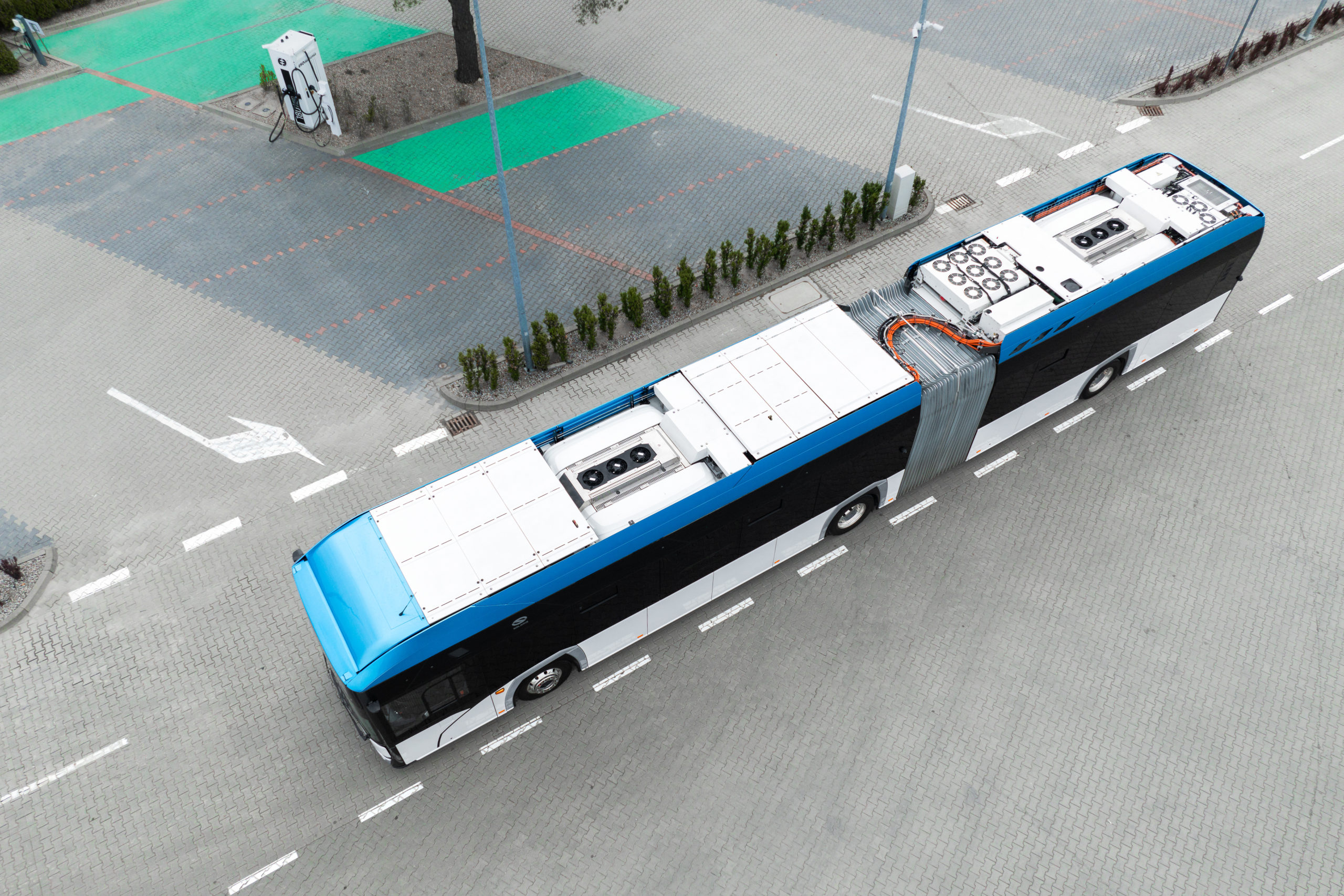
The heart of the drivetrain is a 100 kW proton exchange membrane (PEM) fuel cell, generating electricity from hydrogen. This electricity powers a centrally located electric motor with a nominal output of 240 kW, driving the rear axle. The roof-mounted hydrogen tank system has a volume of 2,130 liters and is made of composite material.
The environmental impact assessment clearly shows that the most significant burden occurs during vehicle operation. Nearly 77% of all greenhouse gas emissions, and more than 80% of impacts related to the use of fossil fuels, are attributed to this lifecycle phase. This is mainly because, although the hydrogen-powered bus emits no direct pollutants during operation—only water vapor—the production of the hydrogen used involves significant environmental burdens. The assessment used fossil-derived hydrogen from oil refining, whose production emits large amounts of carbon dioxide. This emission does not originate from the vehicle but occurs during the fuel production phase, yet according to lifecycle analysis logic, its impact belongs to the entire operational phase. This illustrates that even a locally zero-emission vehicle can only be considered environmentally friendly if its energy source is produced sustainably.
Nevertheless, it is essential to note that the manufacturing phase also has a substantial environmental impact, particularly through raw material production and procurement. According to the lifecycle analysis, 86% of the environmental impacts related to the depletion of mineral, non-renewable resources—such as various metals and electronic raw materials—occur in this early phase. Similarly significant is the acidification potential linked to raw material production. More than 58% of such emissions also occur during the manufacturing phase.
In contrast, ozone-depleting effects are primarily associated with the later stages of the lifecycle, known as the downstream phase. The Environmental Product Declaration indicates that 67.5% of the ODP (ozone depletion potential) value occurs in this lifecycle phase, which includes not only operation but also maintenance and end-of-life waste management activities. It is important to understand that the ODP is an indicator of the extent to which a product or process contributes to the depletion of the Earth’s protective ozone layer. While the Solaris Urbino 18 hydrogen does not directly emit such substances during operation, related indirect emissions—such as those from refrigerants used in air conditioning systems, maintenance aids, or emissions from component disposal—still have a significant impact.
Considering recyclability aspects, the vehicle achieved exceptionally favorable indicators. According to ISO 22628, the recycling rate is 96.4%, and the total recoverability rate is 96.5%. Throughout the vehicle’s lifetime, Solaris accounted for the replacement of more than a hundred different components, many of which are of the same type and material, allowing for grouped, aggregated calculation methods in the lifecycle assessment. In managing the generated waste, the model uses a “cut-off” approach: at the end of the product’s lifecycle, further environmental impacts of materials treated as waste are no longer considered, nor are avoided environmental impacts accounted for in the case of recycled materials.
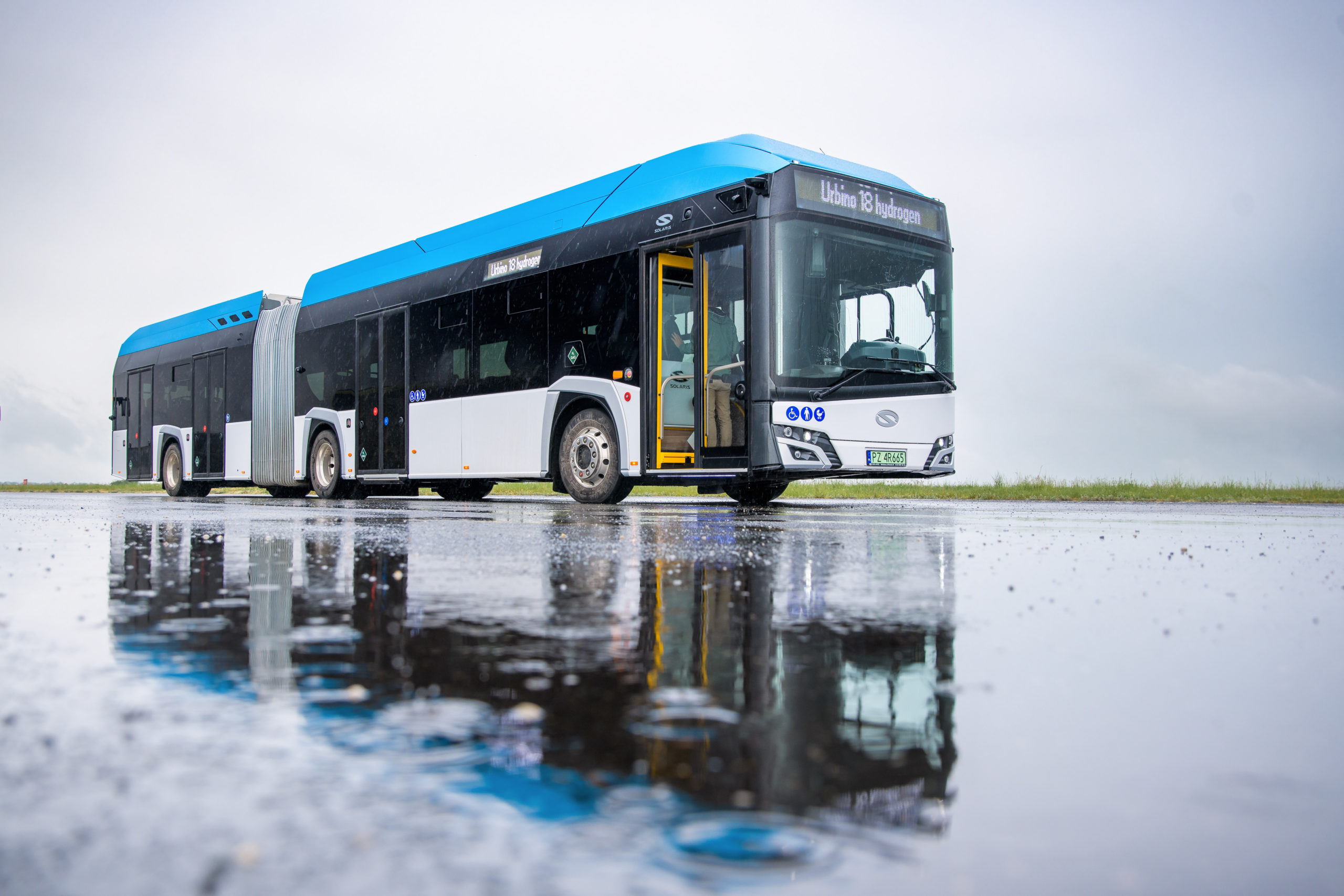
The Solaris Urbino 18 hydrogen is the third model for which the manufacturer has commissioned an environmental product declaration, following the Urbino 18 electric and Urbino 12 hybrid. The data in the document clearly demonstrate that the environmental performance of an urban bus does not solely depend on emissions during operation. The lifecycle analysis considers all factors that impact the environment: from raw material extraction through manufacturing and operation to end-of-life disposal. For the Urbino 18 hydrogen, these components collectively determine the actual environmental footprint—not just the fact that the vehicle emits no exhaust gases while in motion.
 Related Articles


